
Same-Day Veterinary AST: Beat the 72-Hour Culture Lag
Executive Summary
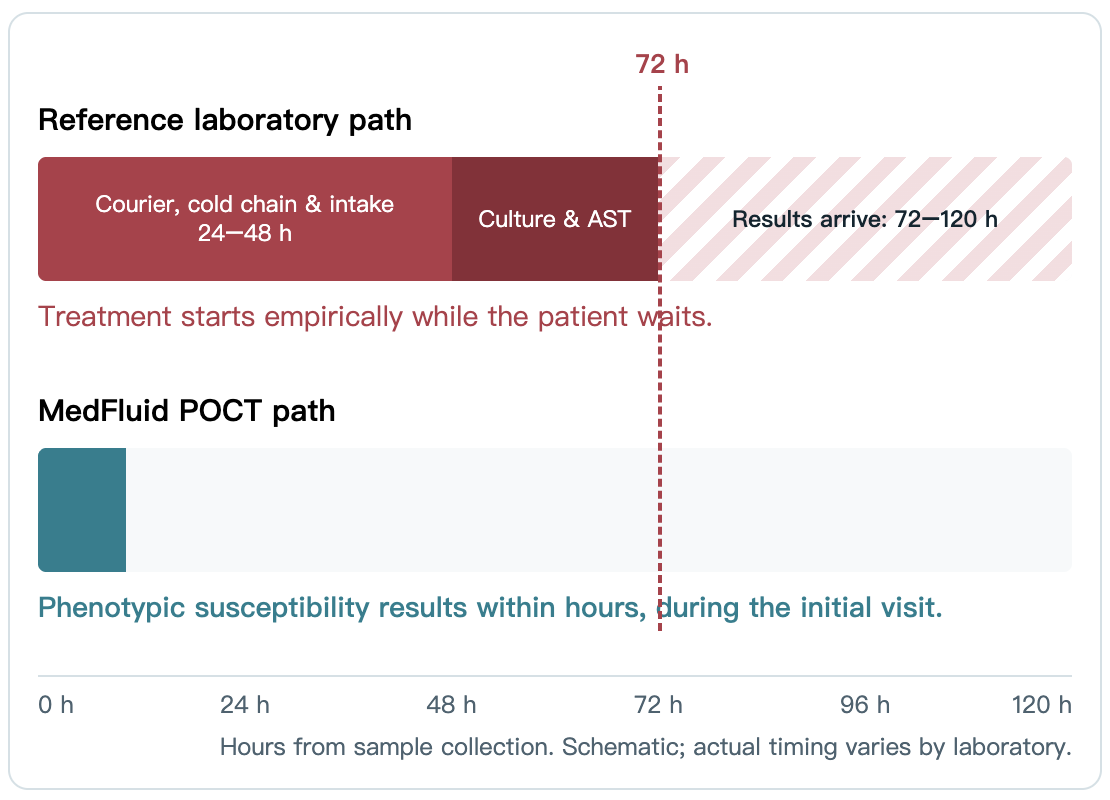
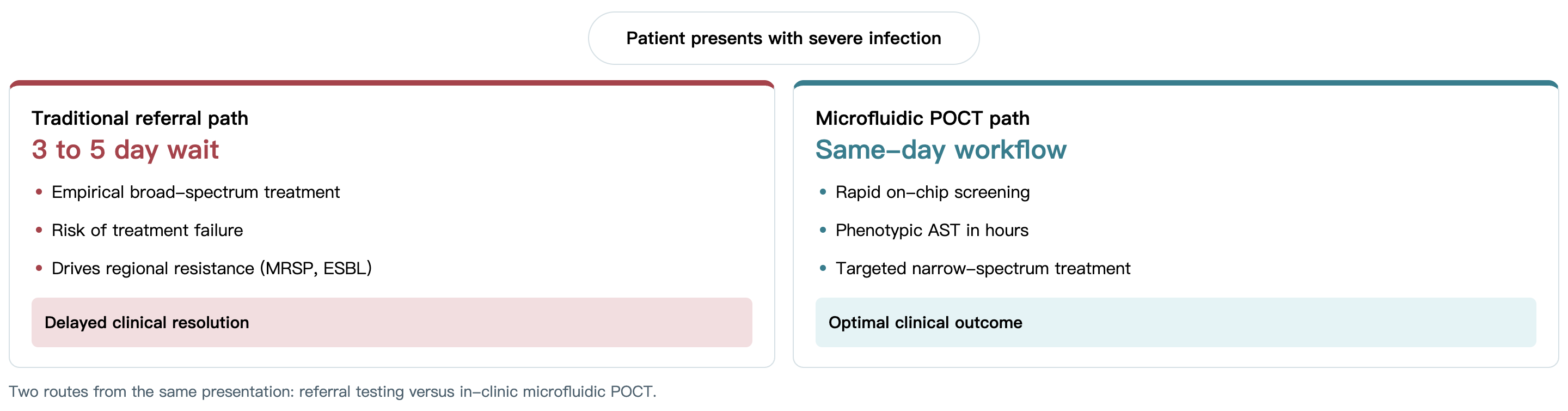
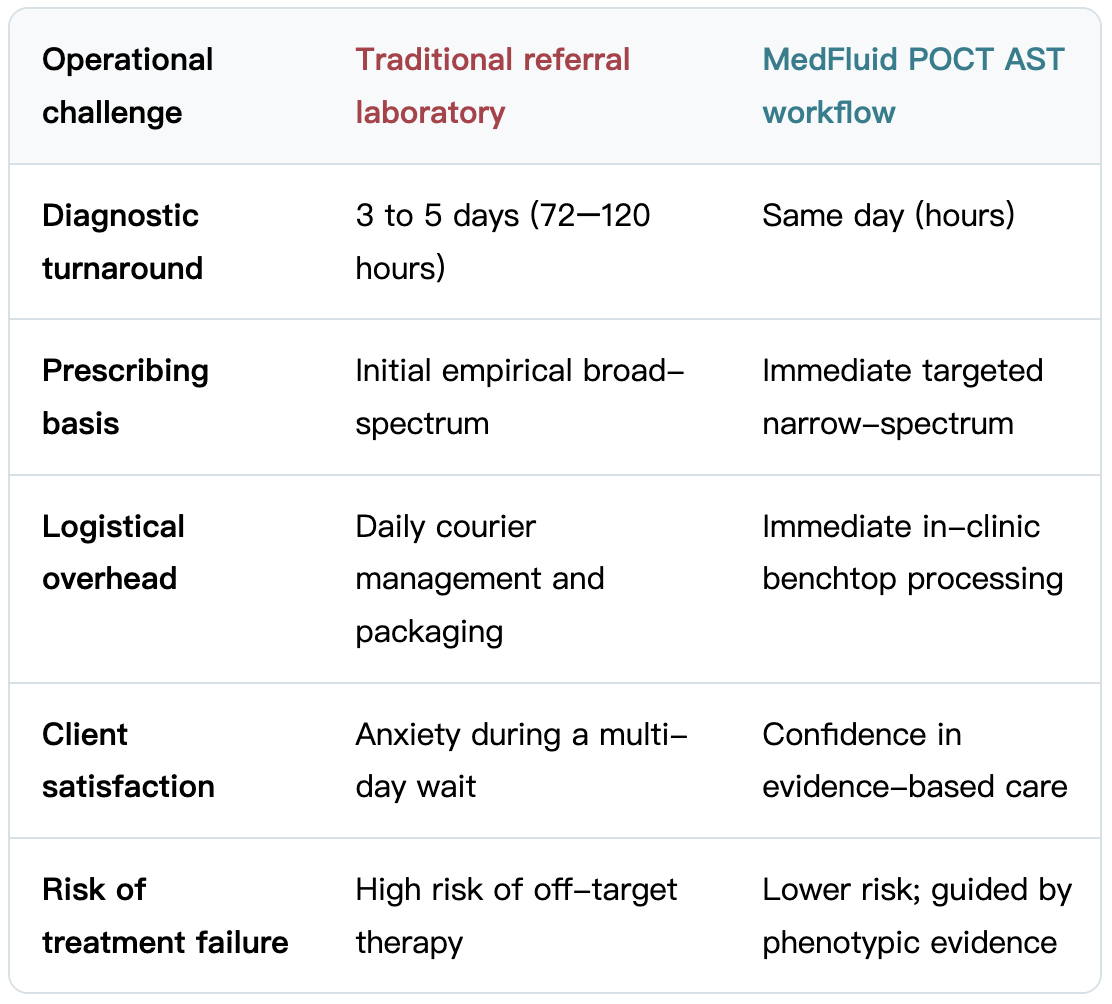
Veterinary medicine stands at a critical threshold. As the global veterinary community prepares for WSAVA 2026 (Warsaw, Oct 13–15) and FASAVA 2026 (Taipei, Oct 31–Nov 2), the mounting threat of veterinary antimicrobial resistance (AMR in animal hospitals) has moved from a theoretical concern to a daily operational crisis. Emergency and critical care clinicians frequently face severe canine and feline infections that demand immediate intervention. Yet traditional reference laboratory workflows force a dangerous delay: clinicians wait 3 to 5 days for standard culture and susceptibility results.
To bridge this window, modern companion animal practice needs a shift toward point-of-care testing (POCT). Microfluidic rapid AST (Antimicrobial Susceptibility Testing) helps hospital medical directors and clinical teams move away from empirical broad-spectrum antibiotic use and toward precise, same-day targeted therapy. By combining rapid pathogen identification with true phenotypic susceptibility testing on the hospital benchtop, microfluidic platforms provide the decision support needed to uphold global antimicrobial stewardship standards.
The Clinical Bottleneck: When 72-Hour Referral Lab Delays Fuel Empirical Prescribing
In small animal practice, complex bacterial infections carry high clinical stakes. Acute canine and feline infectious diseases, such as complicated lower urinary tract infections (UTIs), persistent canine pyoderma, feline upper respiratory tract infections, and post-surgical septic complications, all require rapid treatment decisions.
When samples are sent to external reference laboratories, traditional broth microdilution or disk diffusion testing introduces a long lag phase:
- Logistical transport lags. Courier pickup schedules, cold-chain transport, and laboratory intake consume 24 to 48 hours before incubation even begins.
- Bacterial growth timeframes. Standard culture requires long incubation to establish visible colony-forming units (CFUs) and evaluate inhibition zones.
- The empirical dilemma. Faced with a symptomatic patient and an anxious owner, clinicians cannot leave severe infections untreated for 72+ hours, so empirical broad-spectrum therapy is started.
This reliance on empirical treatment increases selection pressure for multidrug-resistant (MDR) pathogens in companion animal populations. High-risk strains, including Methicillin-Resistant Staphylococcus pseudintermedius (MRSP) and Extended-Spectrum Beta-Lactamase (ESBL)-producing Escherichia coli, are now regularly isolated in animal hospitals. When an empirical antibiotic fails against an undetected MDR pathogen, the patient suffers prolonged morbidity, costs escalate, and resistant strains spread within the hospital and the community.
Benchtop Microfluidic POCT: The Technological Leap in Veterinary Rapid AST
Solving this diagnostic delay means moving testing from distant central laboratories to the point of care. Microfluidic technology is a major advance in canine and feline infectious disease POCT, replacing slow benchtop cultures with precise microscale engineering.
Understanding the MedFluid NAST Platform
The MedFluid NAST platform is purpose-built for in-clinic, point-of-care operation. Unlike complex central lab automation systems, it combines two sequential analytical steps in a single benchtop workflow:
- Rapid pathogen nucleic acid screening. Rapid identification of targeted bacterial pathogens directly from clinical samples.
- Phenotypic antimicrobial susceptibility testing (AST). Real-time observation of live bacterial responses to specific antibiotic panels at clinically relevant concentrations.
On-Chip Mechanism and Microcolony Tracking
The core of MedFluid’s microfluidic architecture is how it handles biological fluid dynamics at the nanoliter scale:
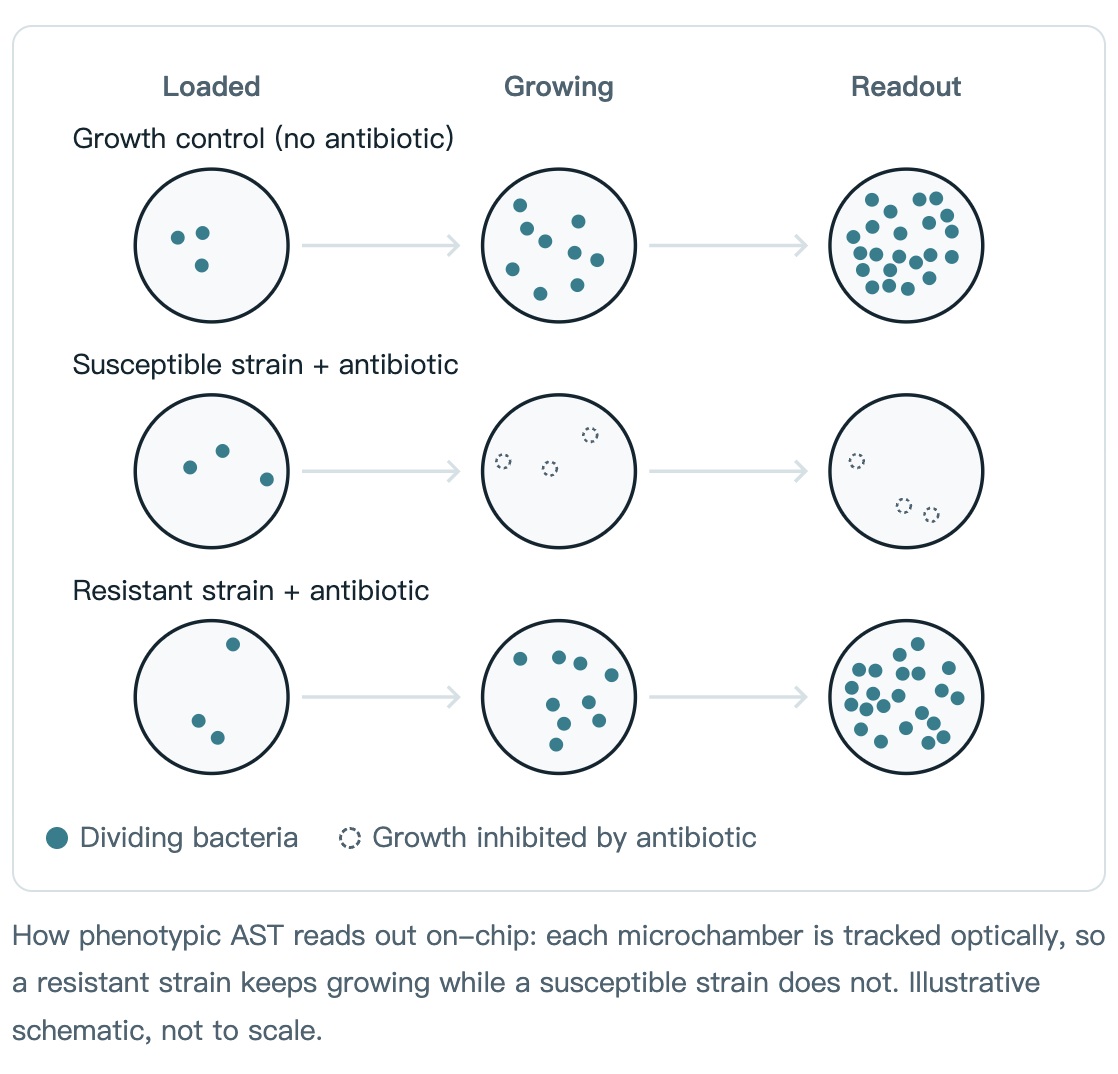
- Single-cell isolation and microchamber arrays. Clinical specimens are captured in microfluidic channels, encapsulating bacteria in microchambers designed for controlled growth.
- Real-time optical microcolony tracking. Instead of waiting days for visible turbidity or large colonies, the system uses high-resolution optical tracking to observe microcolony formation within hours.
- Phenotypic precision. By directly observing bacterial cell division or growth inhibition in the presence of antibiotics, the system delivers definitive phenotypic susceptibility data, not merely genotypic resistance-marker predictions, in a fraction of the traditional turnaround time.
Operationalizing Same-Day Precision Medicine in Animal Hospitals
Bringing microfluidic rapid AST into regular clinical practice turns a reactive multi-day wait into a streamlined, same-day protocol.
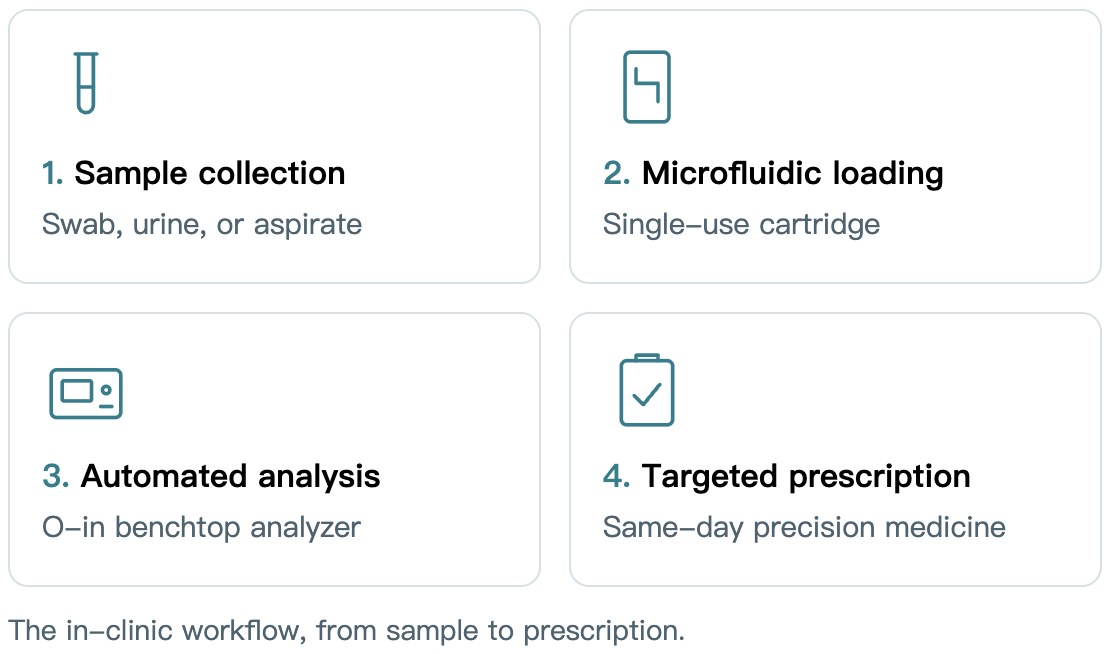
The in-clinic workflow
- Sample collection and preparation. Collect standard clinical samples (urine, wound swabs, otic exudates, or aspirates) during the initial patient examination.
- On-chip cartridge loading. Transfer the prepared sample into the dedicated single-use microfluidic cartridge containing pre-loaded antibiotic panels.
- Benchtop run on the O-in analyzer. Insert the cartridge into the MedFluid O-in analyzer. The automated system manages fluidic control, incubation, microcolony optical tracking, and data analysis without requiring specialized laboratory technician expertise.
- Actionable results and same-day prescribing. Within hours, the clinician receives an unambiguous phenotypic susceptibility report, supporting an immediate, evidence-based narrow-spectrum prescription during the initial visit.
Practice management benefits
Global Stewardship and Taiwan’s Leadership at FASAVA 2026 Taipei
Adopting point-of-care rapid AST aligns with current global veterinary initiatives. Both the World Small Animal Veterinary Association (WSAVA) and the Federation of Asian Small Animal Veterinary Associations (FASAVA) have emphasized actionable antimicrobial stewardship guidelines to combat regional AMR escalation.
Key stewardship imperatives for the 2026 congresses include:
- Eliminating unnecessary broad-spectrum use. Reserving highest-priority critically important antimicrobials (HPCIAs) for cases where phenotypic resistance to first-line agents is proven.
- Diagnostic first principles. Establishing pathogen identity and antimicrobial susceptibility before committing to long-term therapy.
- Regional innovation. As Taipei prepares to host FASAVA 2026, Taiwan’s biomedical microfluidics sector is showing how advanced microfabrication can solve complex clinical diagnostic challenges. Local innovations like MedFluid offer practice leaders worldwide a scalable model for modern point-of-care diagnostics.
Clinician FAQs on In-Clinic Microfluidic Rapid AST
How does microfluidic AST turnaround time compare to traditional reference labs?
Traditional culture and susceptibility testing requires 72 to 120 hours due to logistical transport and slow bacterial colony growth. Microfluidic AST tracks microcolony growth at the nanoliter scale, delivering definitive phenotypic susceptibility results within hours, during the patient’s initial visit.
Is specialized laboratory technician training required to operate the MedFluid O-in analyzer?
No. The system is designed specifically for point-of-care use in busy animal hospitals. Sample loading onto the cartridge is simple, and the automated benchtop analyzer handles fluid processing, optical analysis, and report generation.
What companion animal pathogens and sample types are supported?
The platform handles common clinical samples, including urine, wound swabs, skin exudates, and biological aspirates. It targets major canine and feline bacterial pathogens responsible for UTIs, pyoderma, respiratory infections, and soft tissue infections, including key resistant organisms like E. coli, Staphylococcus pseudintermedius, Pseudomonas aeruginosa, and Klebsiella species.
How does in-clinic rapid AST impact veterinary hospital profitability?
By bringing diagnostic testing in-house, hospitals retain diagnostic revenue that would otherwise go to third-party reference laboratories. Same-day, high-precision medicine also increases client retention, improves treatment compliance, and positions the practice as a leader in modern veterinary care.
Replace empirical guessing with phenotypic evidence
The 72-hour culture delay is no longer an unavoidable bottleneck in companion animal practice. Microfluidic rapid AST gives clinicians point-of-care phenotypic accuracy, protecting patient health and advancing global antimicrobial stewardship.
Contact MedFluid to request clinical validation data, arrange an in-clinic evaluation, or explore regional distribution opportunities.